
PLAYERS
Introduce a new progression layer that unlocks early and expands with mastery. Early interactions needed to feel clear and low-risk. Late-game optimization needed to reward deliberate investment.
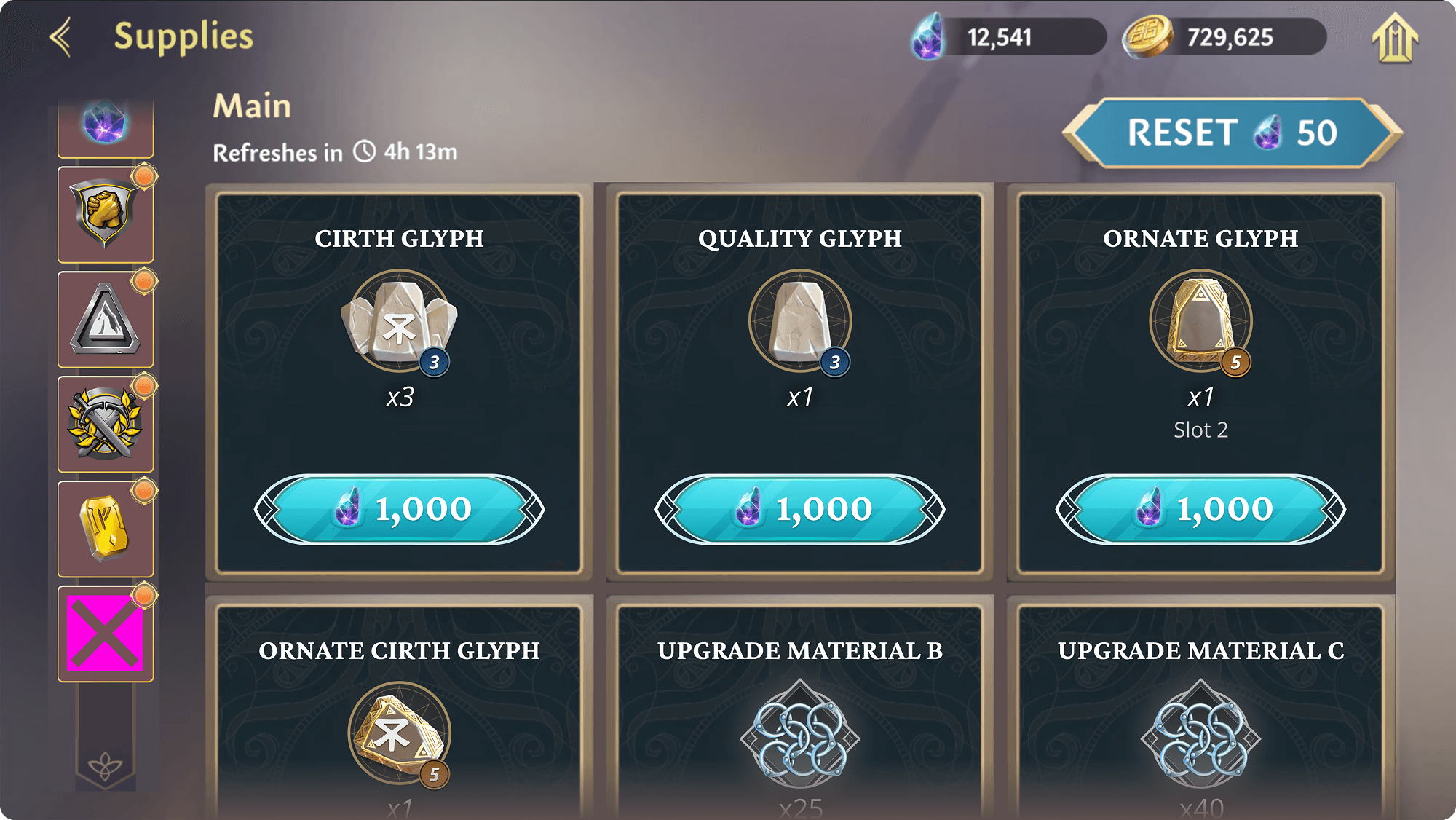
The goal was to introduce a sustainable new economy layer with predictable monthly monetization, including a reliable store cadence for items tied to progression.
UX
Make a dense system readable and reversible. Clearly separate experimentation from permanent commitment so players can adjust, recover, and invest with confidence.
I treated Glyphs and Relics as a long-term systems problem. The work centered on player mental models, clearly separating reversible and irreversible actions, and structuring upgrade thresholds so experimentation never felt punishing.
In parallel, I aligned with design, engineering, and Live Ops on system rules, and a predictable store cadence to support sustainable engagement and long-term scale.
I spoke with internal teams, tore down comparable systems, and read through player conversations to understand where progression breaks down and where it holds up. Players wanted deeper customization than most competitors offered, but early friction and hidden thresholds often led to inefficient builds, resource waste, and second-guessing.
Audience:
Three core player motivations shaped the system.
Optimizers chased efficiency and long-term gains.
Collectors valued completion and ownership.
Lore-driven players cared about meaning and hero identity.
The system had to support fast, confident decisions across all three while leaving room for deeper expression over time.
Comp Analysis
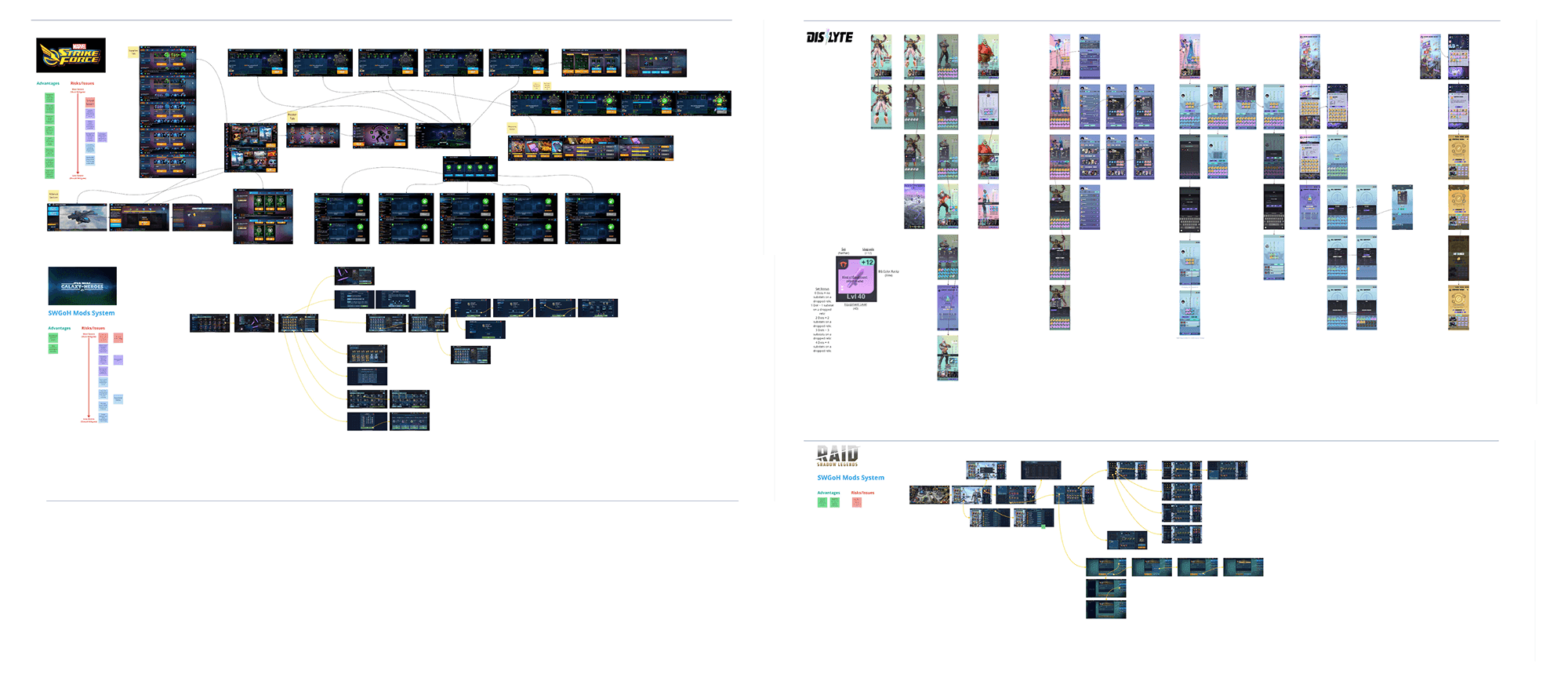
I reviewed progression systems across Dislyte, Marvel Snap, Summoners War, Raid, and Galaxy of Heroes to study how they communicate rarity, structure upgrades, and guide investment. These patterns informed our approach to stat readability, upgrade thresholds, and reveal pacing, helping balance early clarity with long-term depth.
Player Actions
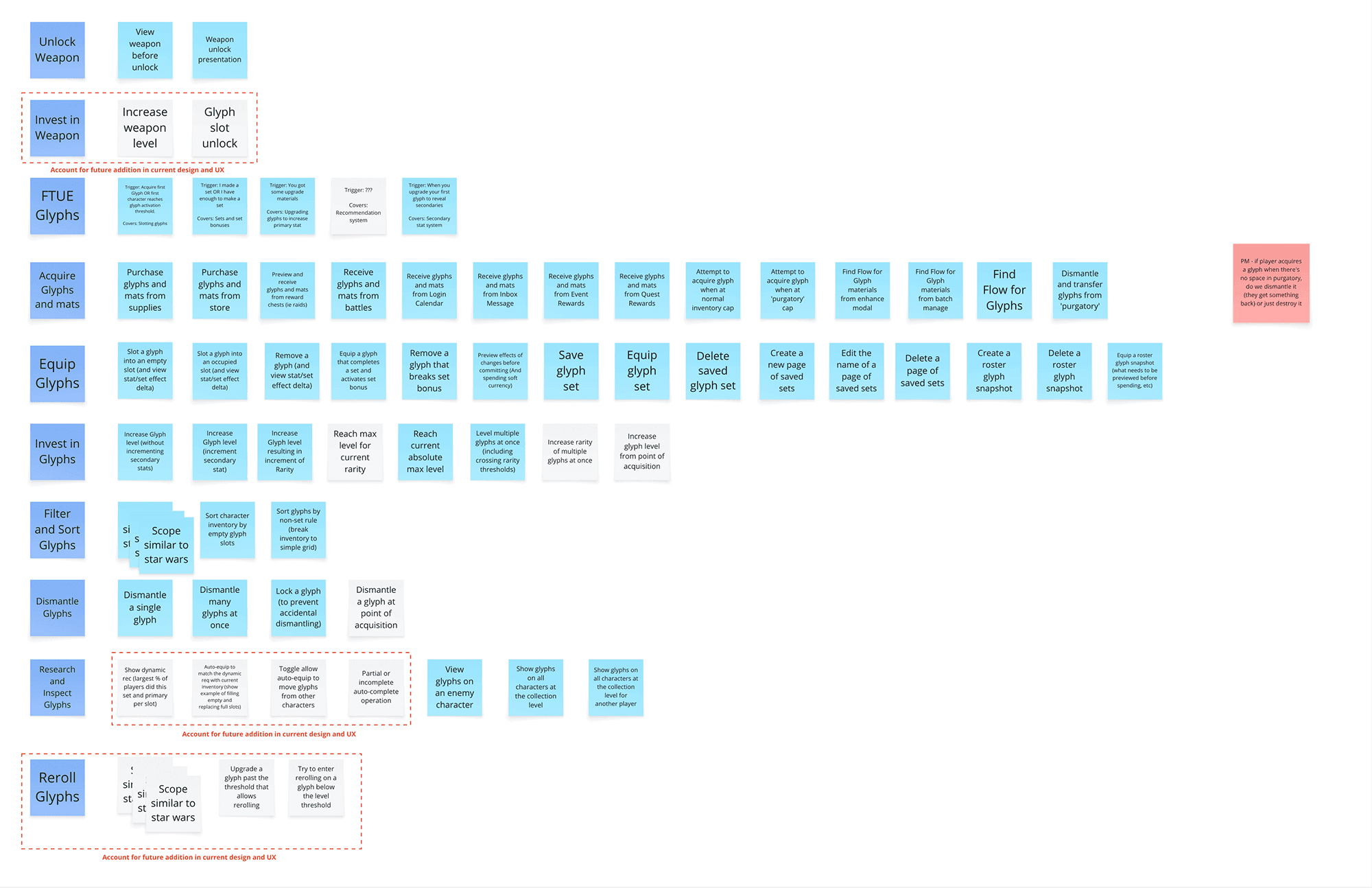
Before designing UI, I mapped every meaningful action across the Glyphs and Relics ecosystem: unlock paths, acquisition sources, equip flows, set management, upgrade thresholds, rerolls, dismantles, filtering, and edge cases like caps, pending states, and partial upgrades.
It became the backbone for interaction logic, ensuring the interface reflected real player behavior instead of forcing players into artificial flows.
Player Paths
Once all player actions were mapped, I grouped them into core paths that define how players repeatedly engage with the system.
Information Architecture
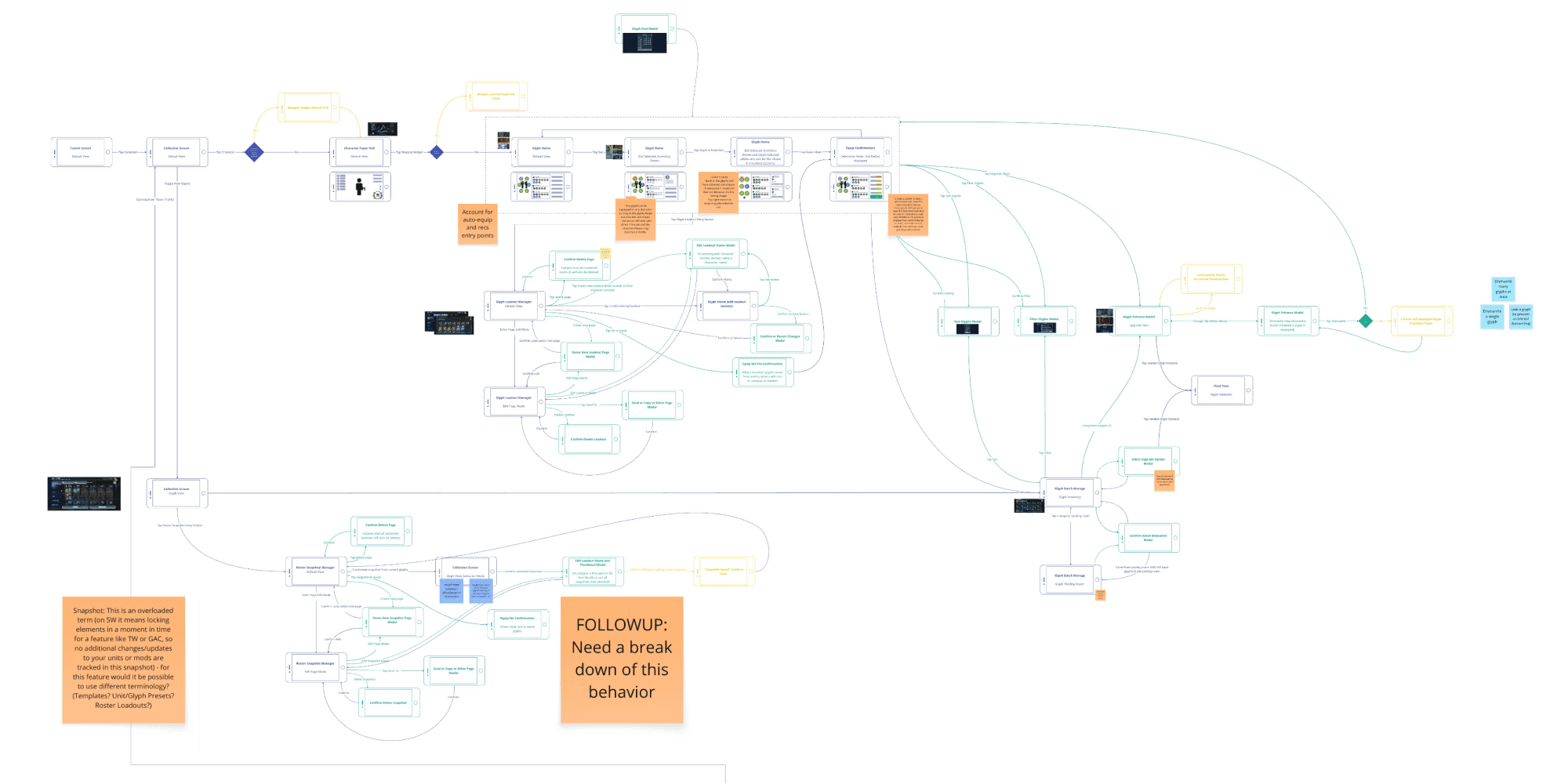
I built an information architecture map to translate player actions into a clear system framework. It defines how players move between inspect, equip, upgrade, reroll, and dismantle states.
The IA became a living document and blueprint for UX, UI, and engineering, aligning navigation and screen relationships.
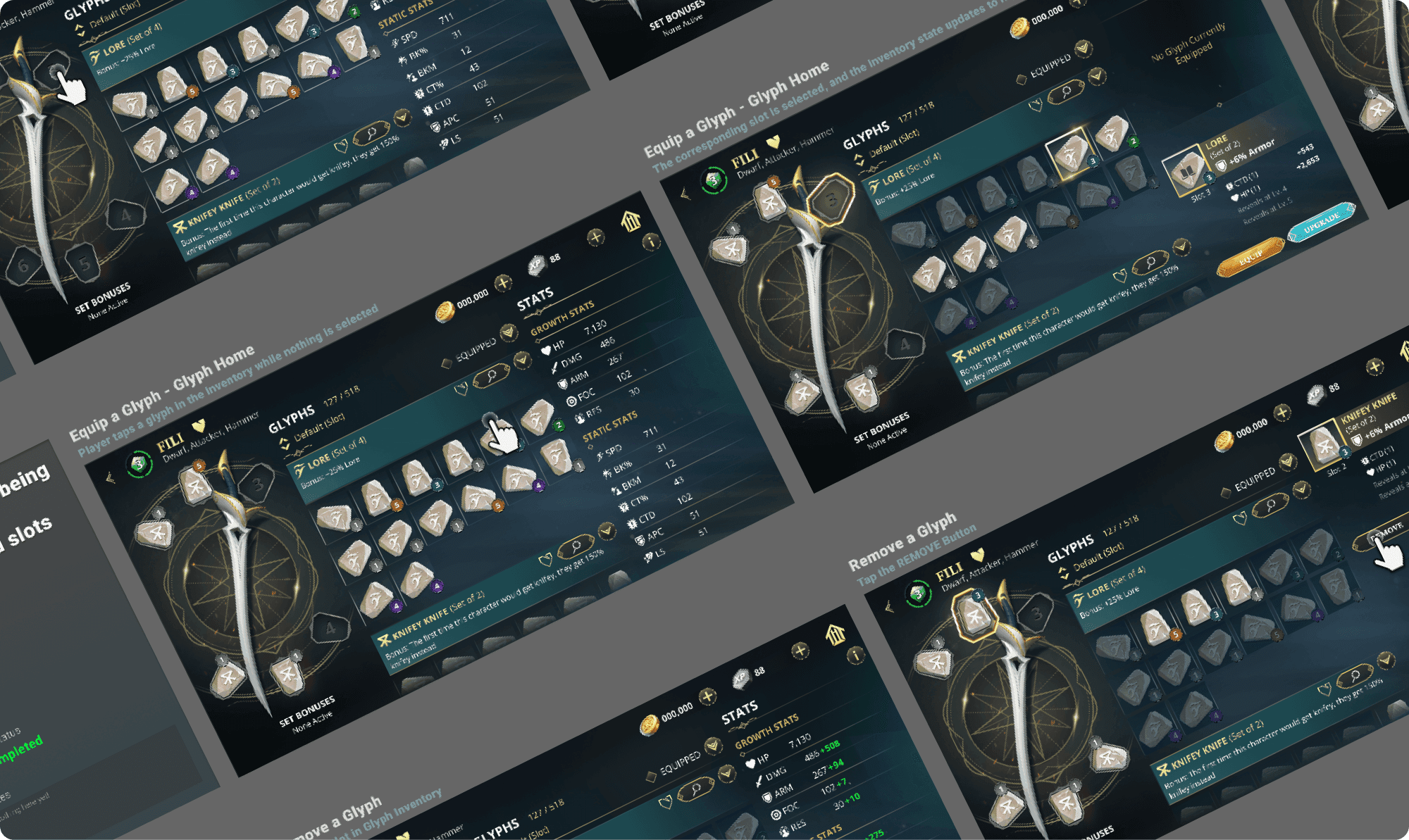
Wireframes
I designed the core states of the Glyphs and Relics system at high fidelity. These designs served as the reference for team reviews and engineering implementation, and carried through to the shipped UI.
Despite the system’s depth, the UI made upgrade decisions transparent, so players could experiment and commit with confidence.
Motion Targets
I helped define motion targets for upgrades, stat reveals, set activations, and rerolls. The priority was clarity over spectacle. Working with our UX Director and an external motion vendor, I reviewed pacing, feedback timing, and visual intensity to ensure players understood what changed and why. In a system this dense, animation reinforced decisions rather than distracting from them. This wasn’t ornamental polish. It was essential to user experience.
Glyphs and Relics introduced a new progression layer that unlocks early, teaches itself gradually, and scales into one of the deepest optimization systems in the game. It also established a predictable store structure, giving Live Ops a reliable way to introduce new items.
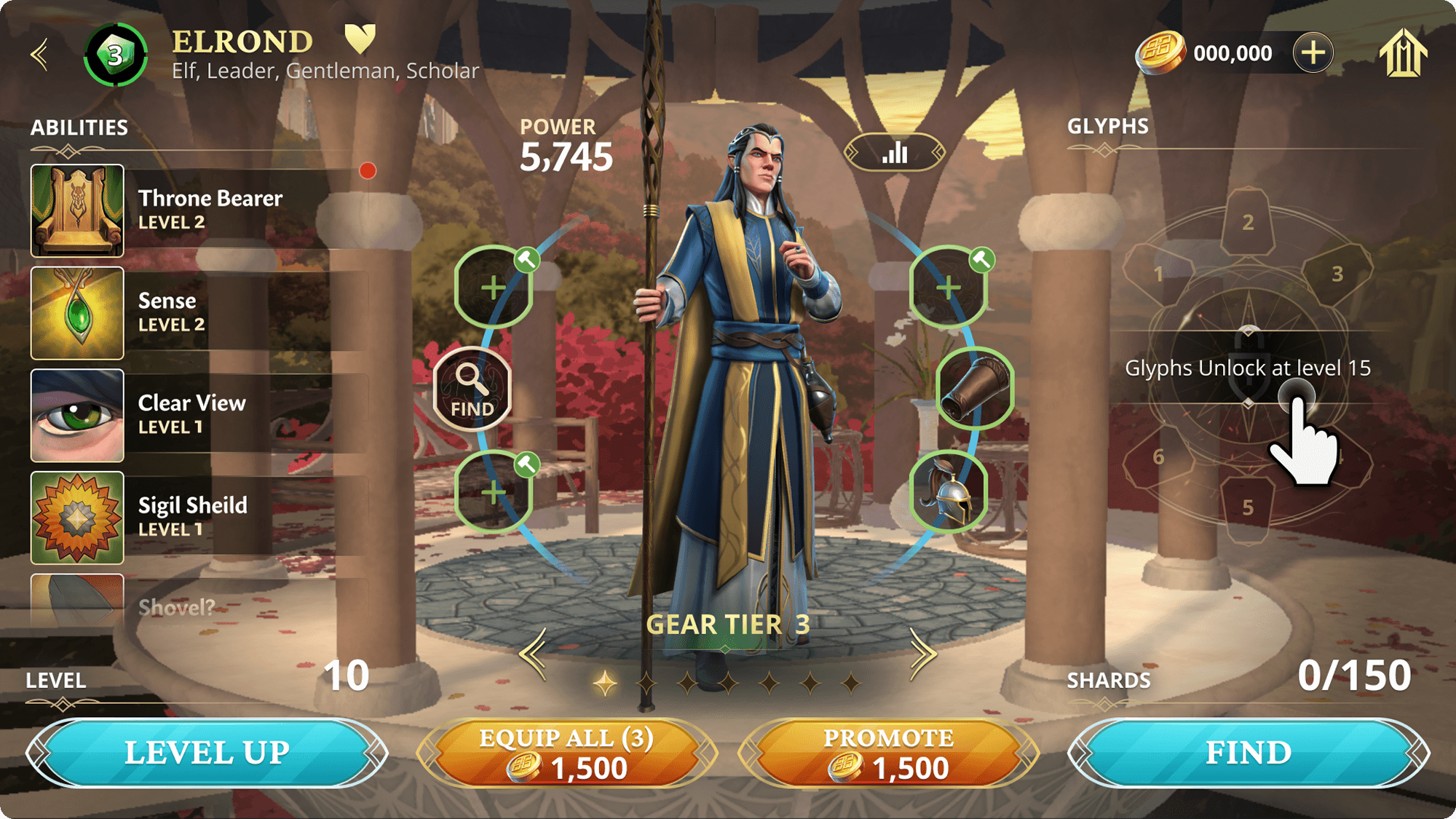
Unlock and Access
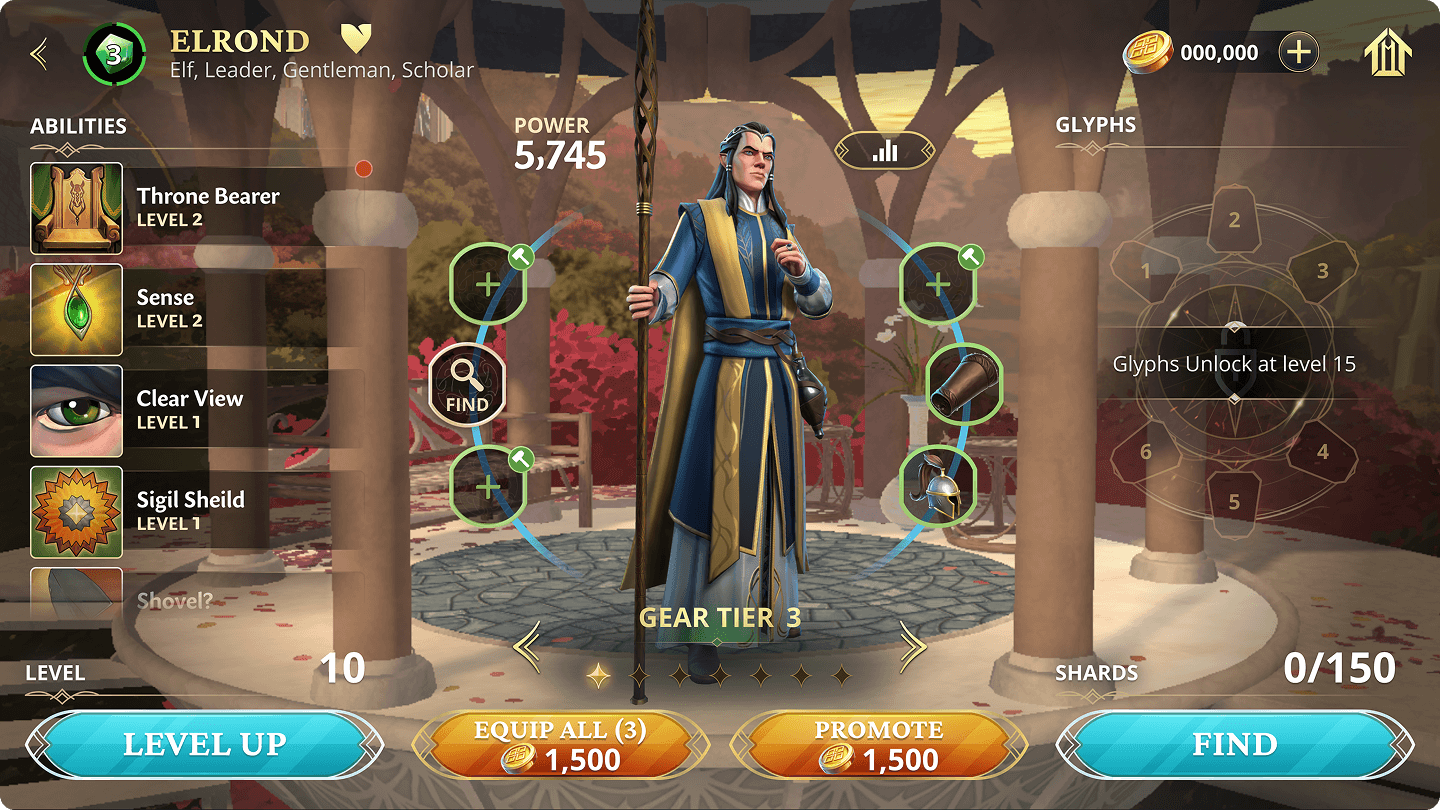
The system is introduced before it becomes active, giving players time to understand its structure. Relic slots preview future states through distinct shapes, and an in-context tooltip explains when and how the feature unlocks. By the time it’s available, the UI is already familiar.
Meaningful Customization
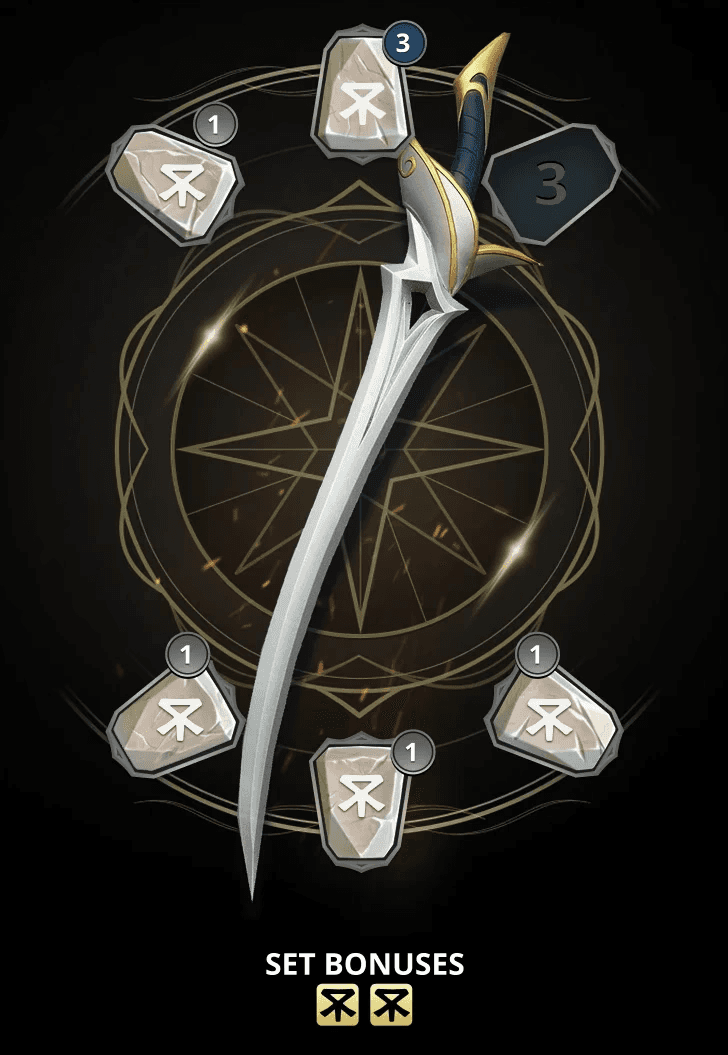
Glyphs attach to specific Relic slots, creating structured build combinations through stat pairings and set bonuses. Players can tailor heroes for different modes and strategies within defined rules and constraints.
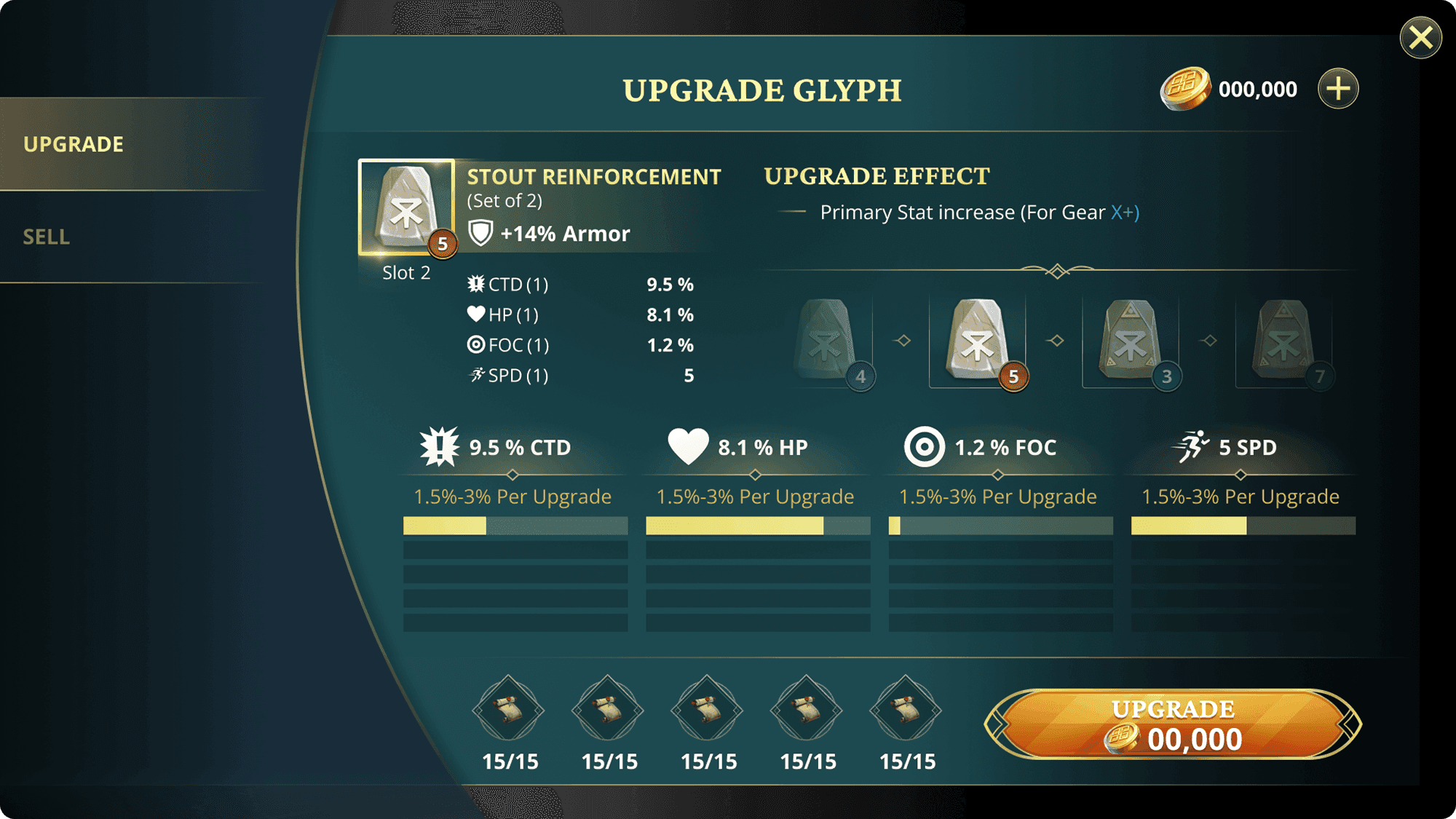
Upgrade and Reveal
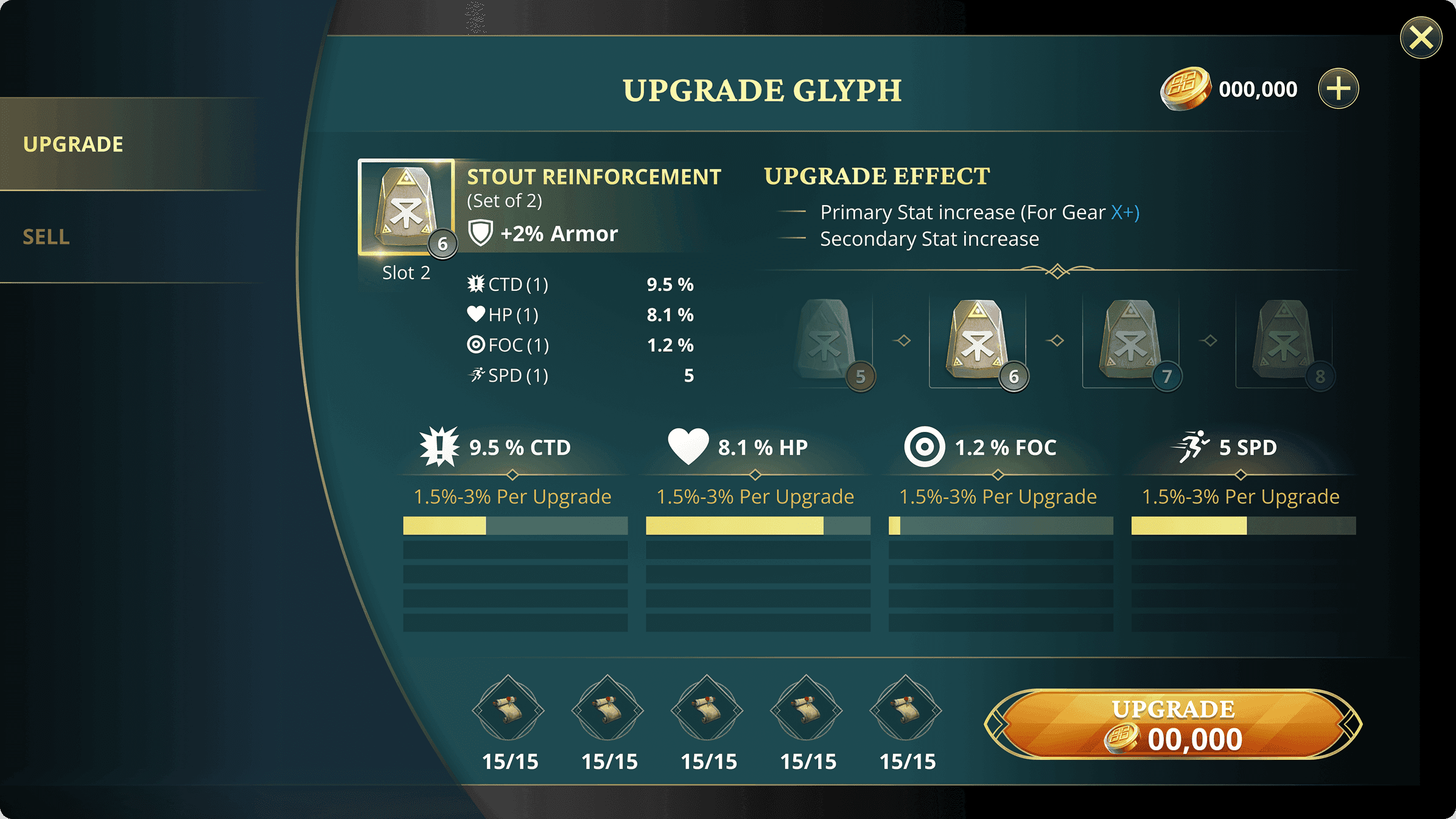
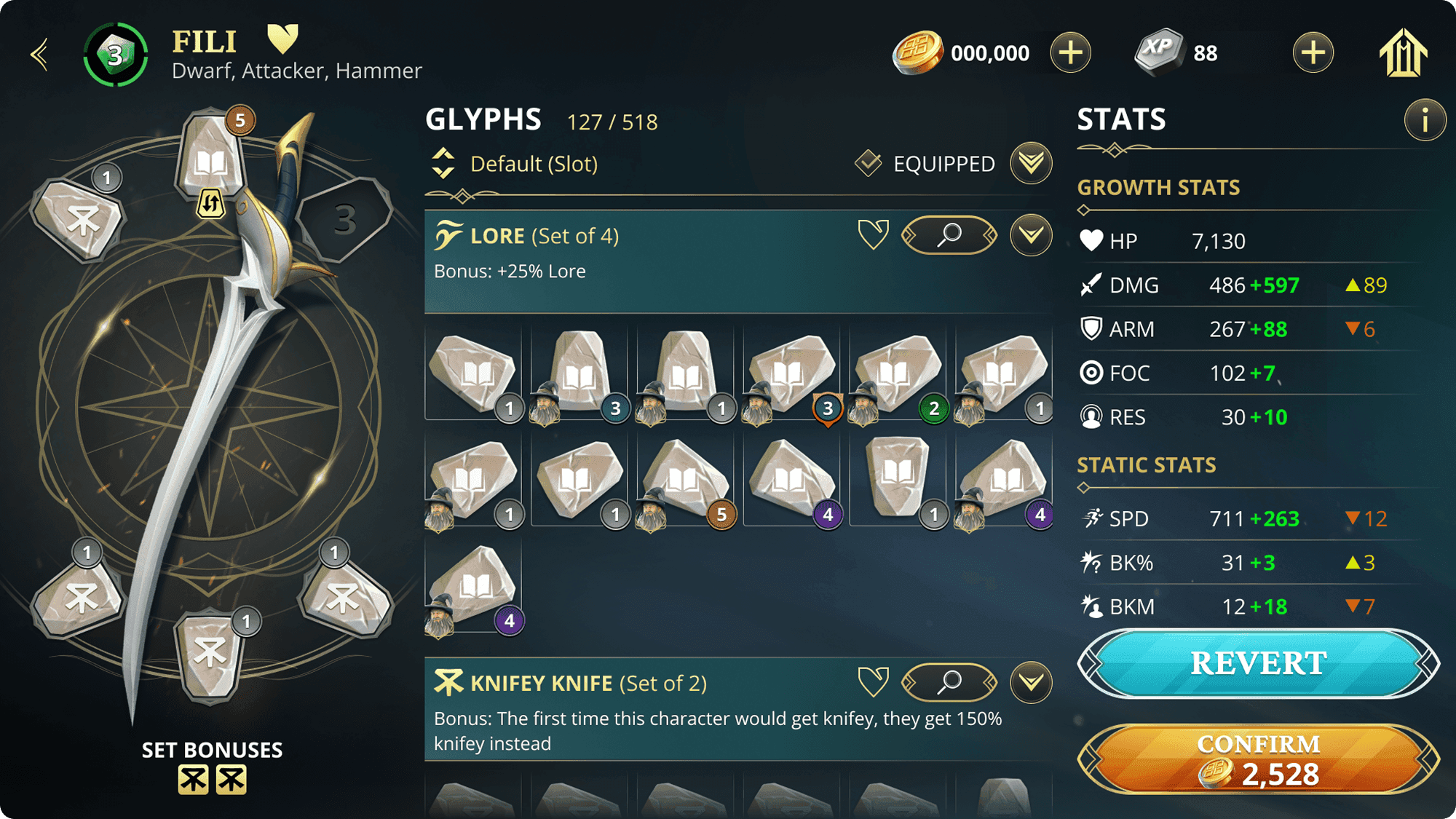
Upgrades follow predictable thresholds. The primary stat is permanent, while secondary stats unlock at defined levels. Each screen displays the changes and their associated costs before a player commits. Selling introduces risk without creating irreversible mistakes.
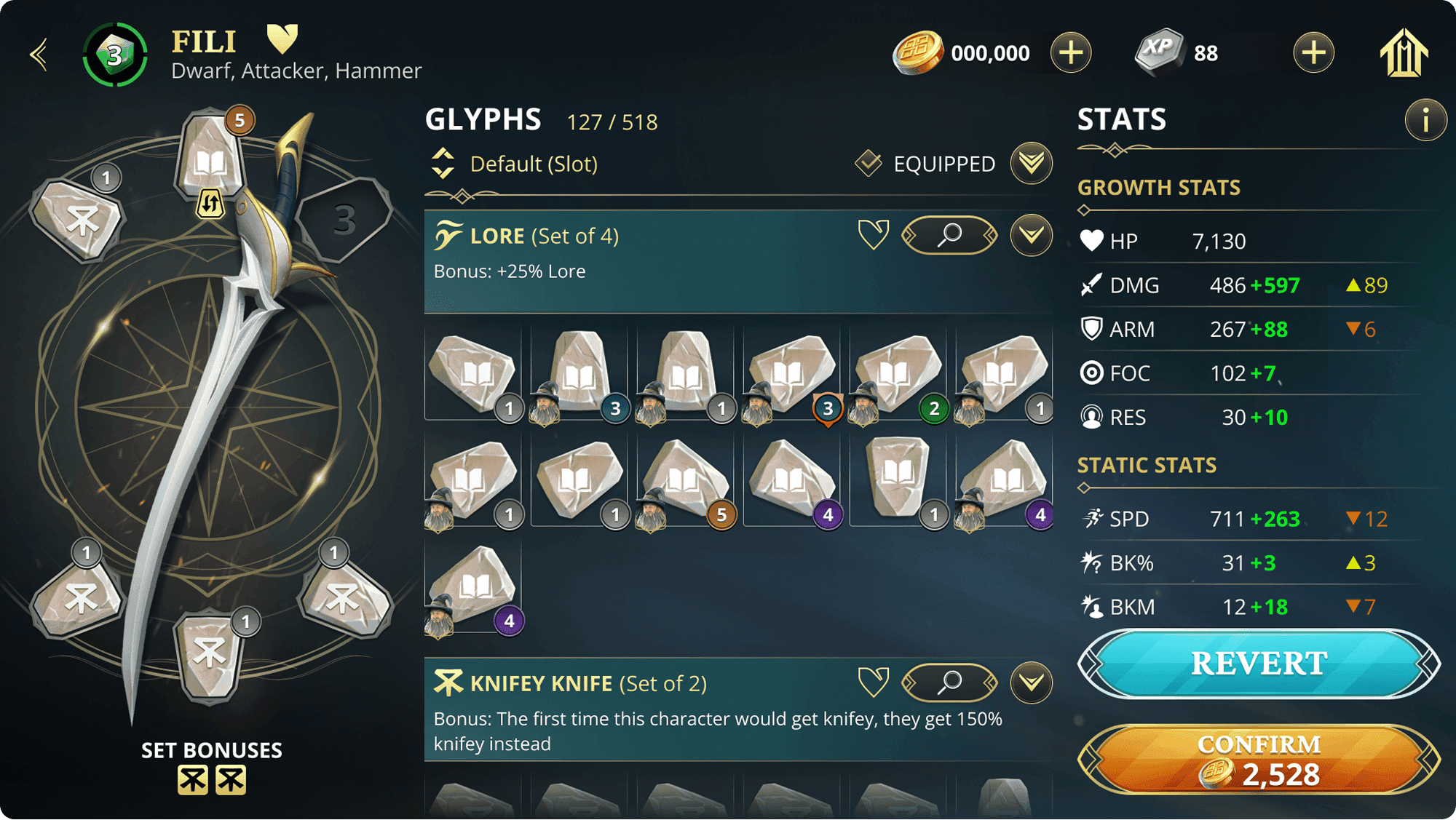
Streamlined Management
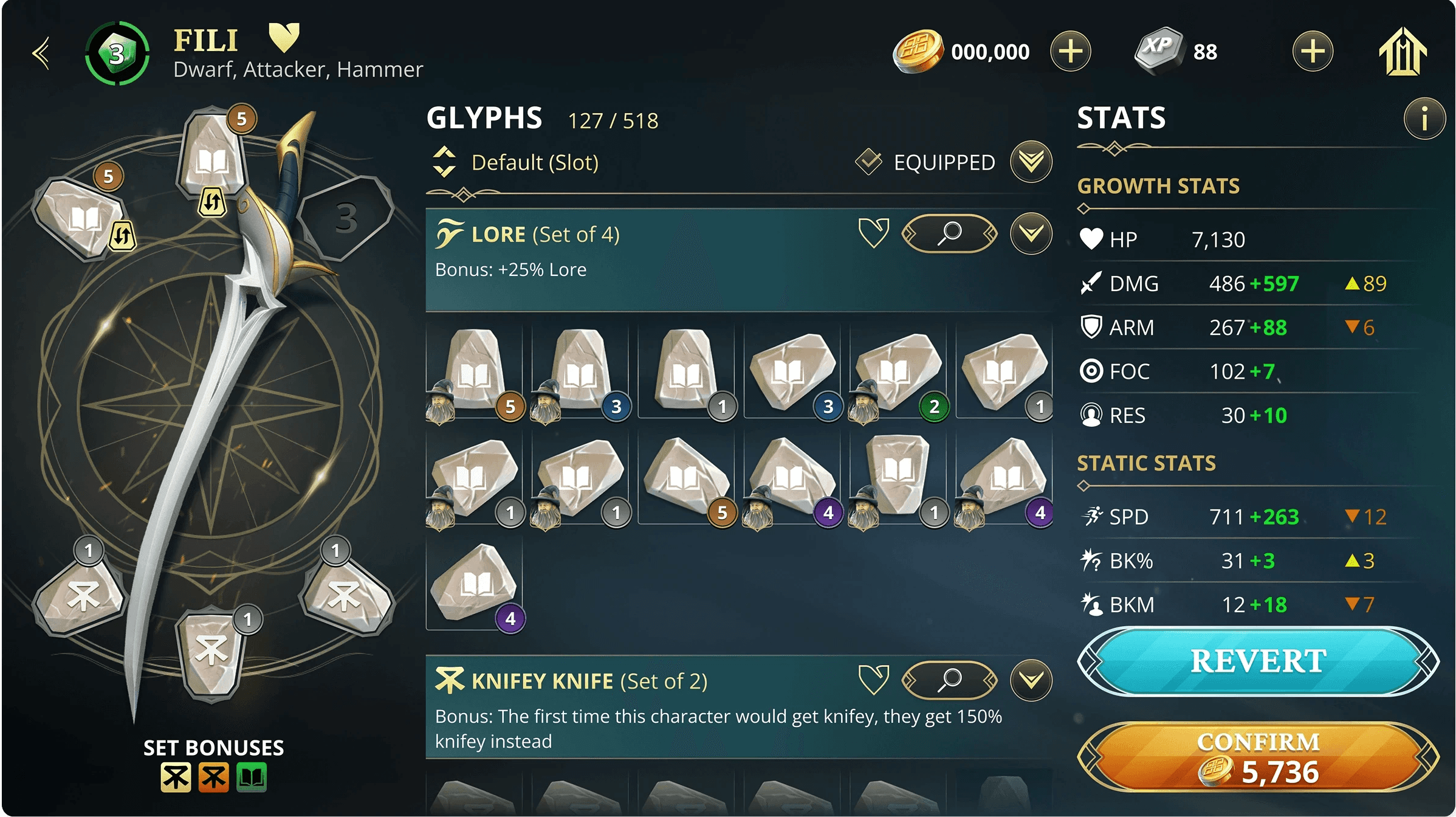
Inventory, comparison views, and confirm/revert states were structured to support managing multiple characters and loadouts. Clear stat deltas, slot indicators, and set icons made tradeoffs visible before commitment, while revert actions prevented costly mistakes.
Predictable Store Cadence
A structured monthly store cadence was built alongside the system, giving players reliable access to upgrade materials and Glyph variants. This supported long-term planning for players and consistent revenue beats for Live Ops.
Stronger Mid-Game Engagement
Glyphs and Relics gave players a compelling reason to return daily. The upgrade loop, stat reveals, and set bonuses created a steady rhythm of investment that extended the lifespan of mid-game heroes.
Clear, Confident Decision-Making
Stat deltas, pending states, slot shapes, reveal thresholds, and Revert/Confirm flows removed ambiguity from deep upgrades. Players could experiment, adjust, and commit without fear of irreversible mistakes.
More Expressive Builds
Custom Glyph combinations gave players real ownership over their heroes. Builds became more flexible and strategic, supporting both PvE and PvP playstyles without forcing a single optimal path.
A Scalable Live-Ops Foundation
The system introduced a new economy layer and a predictable store cadence, giving design, economy, and Live Ops a durable framework for adding new sets, rarities, and progression beats without reworking the core loop.
Glyphs and Relics transformed a deeply complex upgrade system into one players can understand, trust, and enjoy. By grounding the experience in clear actions, predictable feedback, and visible consequences, the system delivers real depth without overwhelming players.
The result is a progression layer that scales across player maturity, supports live-ops expansion, and gives players genuine ownership over how their heroes grow. For a system this deep, the biggest win was making every decision feel safe, intentional, and worth investing in.